Dɔwɔwɔwo 19
1 Esime Apolo ganɔ Korinto la, Paulo hã zɔ mɔ to Terki nutowo me va ɖo Efeso. Ekpɔe be xɔsetɔ aɖewo le afi ma, eye le woƒe nyamedzodzro me la,
While Apollos was at Corinth, Paul passed through the interior and came to Ephesus. There he found some disciples
2 Paulo bia wo be, “Esi miexɔ se la, miexɔ Gbɔgbɔ Kɔkɔe la mahã?” Ke woɖo eŋu be, “Ao, míexɔ Gbɔgbɔ Kɔkɔe la o, eye le nyateƒe me la, míese eŋkɔ kpɔ gɔ̃ hã o.”
and asked them, “Did you receive the Holy Spirit when you became believers?” “No,” they answered, “we have not even heard that there is a Holy Spirit.”
3 Paulo yi edzi bia wo be, “Ekema nu ka dzie miexɔ se hafi wode mawutsi ta na mi?” Woɖo eŋu be, “Wode mawutsi ta na mí ɖe Yohanes Mawutsidetanamela ƒe nufiafia nu.”
“Into what, then, were you baptized?” Paul asked. “The baptism of John,” they replied.
4 Esi Paulo se nya sia la, egblɔ na wo be, “Yohanes Mawutsidetanamela ɖeko wòwɔe be yeafia ale si ame nadzudzɔ nu vɔ̃ wɔwɔ, atrɔ va Mawu gbɔ eye emegbe la, wòaxɔ Yesu Kristo, ame si ƒe nya Yohanes gblɔ be ele vava ge la dzi ase, ale be woade mawutsi ta nɛ ɖe eƒe ŋkɔ me.”
Paul explained: “John’s baptism was a baptism of repentance. He told the people to believe in the One coming after him, that is, in Jesus.”
5 Esi wose nya sia la, wo katã wolɔ̃, eye Paulo de mawutsi ta na wo ɖe Aƒetɔ Yesu ƒe ŋkɔ me.
On hearing this, they were baptized into the name of the Lord Jesus.
6 Esi Paulo da asi ɖe wo dzi la, woxɔ Gbɔgbɔ Kɔkɔe la, eye woƒo nu kple gbegbɔgblɔ bubuwo hegblɔ nya ɖi hã.
And when Paul laid his hands on them, the Holy Spirit came upon them, and they spoke in tongues and prophesied.
7 Ameawo ƒe xexlẽme nɔ ame wuieve.
There were about twelve men in all.
8 Paulo yi ɖe ƒuƒoƒe la me nɔ mawunya gblɔm kple dzideƒo ɣleti etɔ̃ sɔŋ, eye wòle mawufiaɖuƒe la ŋutinya ƒom ɖe wo nu ale be woxɔe se.
Then Paul went into the synagogue and spoke boldly there for three months, arguing persuasively about the kingdom of God.
9 Ame aɖewo mexɔ eƒe nya o, ale wotsi tsitre ɖe eŋu vevie hegblɔ busunya geɖe ɖe Mɔ la ŋu le dutoƒo. Nu sia na be Paulo dzo le wo gbɔ. Ke ekplɔ nusrɔ̃lawo ɖe asi yi Tirano Takpexɔa me, afi si wòƒoa nu na wo le gbe sia gbe.
But when some of them stubbornly refused to believe and publicly maligned the Way, Paul took his disciples and left the synagogue to conduct daily discussions in the lecture hall of Tyrannus.
10 Ewɔ nu sia ƒe eve sɔŋ ale be Yudatɔwo kple Grikitɔ siwo katã le Asia la katã se Aƒetɔ la ƒe nya la.
This continued for two years, so that everyone who lived in the province of Asia, Jews and Greeks alike, heard the word of the Lord.
11 Mawu wɔ nukunu tɔxɛwo to Paulo ƒe asi dzi
God did extraordinary miracles through the hands of Paul,
12 ale gbegbe be wòtsɔa takuviwo kple akɔtawuiwo kaa dɔnɔwo ŋu wohayana, eye gbɔgbɔ vɔ̃wo hã doa go le wo me.
so that even handkerchiefs and aprons that had touched him were taken to the sick, and the diseases and evil spirits left them.
13 Yudatɔ aɖewo hã nɔ tsatsam tso du me yi du me henɔ gbɔgbɔ vɔ̃wo nyam le amewo me. Ame siawo va ɖo be yewoayɔ Aƒetɔ Yesu Kristo ƒe ŋkɔ anya gbɔgbɔ vɔ̃e kpɔ be adze edzi na yewo mahã? Woɖoe be ne yewotu ame si me gbɔgbɔ vɔ̃ le la, yewoado ɣli ɖe eta be, “Meɖe gbe na wò le Yesu Kristo, ame si ƒe nya gblɔm Paulo le la ƒe ŋkɔ me be nàdo go!”
Now there were some itinerant Jewish exorcists who tried to invoke the name of the Lord Jesus over those with evil spirits. They would say, “I bind you by Jesus, whom Paul proclaims.”
14 Ame siwo nɔ nu sia wɔm la woe nye Yudatɔwo ƒe nunɔlagã aɖe si woyɔna be Skeva la ƒe viŋutsuvi adreawo.
Seven sons of Sceva, a Jewish chief priest, were doing this.
15 Wova ke ɖe ame aɖe si me gbɔgbɔ vɔ̃ le la ŋu vavã, eye wote kpɔ be yewoanya gbɔgbɔ vɔ̃ la le Yesu ƒe ŋkɔ me. Ke gbɔgbɔ vɔ̃ la bia wo be, “Yesu la medze sii eye Paulo la menyae nyuie, ke miawo ɖe, ame kawoe mienye?”
Eventually, one of the evil spirits answered them, “Jesus I know, and I know about Paul, but who are you?”
16 Enumake ame si me gbɔgbɔ vɔ̃ le la dzo dze wo dometɔ eve dzi, heɖu wo dzi, ƒo wo, eye wòvuvu awu le wo ŋu ale be wosi do go le aƒea me amamae.
Then the man with the evil spirit jumped on them and overpowered them all. The attack was so violent that they ran out of the house naked and wounded.
17 Nya sia kaka ɖe Yudatɔwo kple Helatɔwo siaa dome le Efeso dua me. Ale vɔvɔ̃ tɔxɛ aɖe dze wo dometɔ ɖe sia ɖe dzi, eye wode bubu Aƒetɔ Yesu ƒe ŋkɔ ŋu.
This became known to all the Jews and Greeks living in Ephesus, and fear came over all of them. So the name of the Lord Jesus was held in high honor.
18 Ame geɖe siwo xɔe se la va eye woʋu woƒe nu vɔ̃ɖiwo wɔwɔ me.
Many who had believed now came forward, confessing and disclosing their deeds.
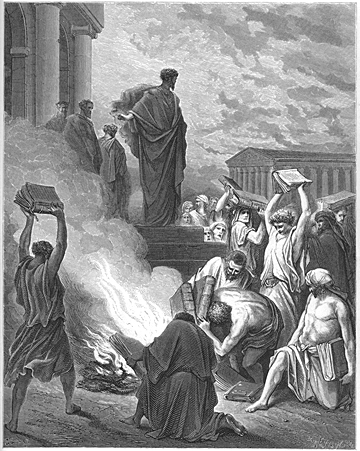
19 Ame siwo nye afakalawo la tsɔ woƒe agbalẽwo kple nu kpotokpotoewo vɛ, eye wotɔ dzo wo le dutoƒo. Nu siwo wotɔ dzoe la ƒe home anɔ abe siɖi akpe blaatɔ̃ ene.
And a number of those who had practiced magic arts brought their books and burned them in front of everyone. When the value of the books was calculated, the total came to fifty thousand drachmas.
20 Esia nye dzesi be Aƒetɔ la ƒe nya la xɔ aƒe kple ŋusẽ le nuto la me vavã.
So the word of the Lord powerfully continued to spread and prevail.
21 Emegbe la, Gbɔgbɔ Kɔkɔe la dee Paulo me be wòayi Makedonia kple Akaya nuto me hafi atrɔ ayi Yerusalem. Eya ŋutɔ hã ɖoe be tso afi ma la, ele be yeayi Roma hã.
After these things had happened, Paul resolved in the Spirit to go to Jerusalem after he had passed through Macedonia and Achaia. “After I have been there,” he said, “I must see Rome as well.”
22 Eɖo eƒe kpeɖeŋutɔ eve siwo nye Timoteo kple Erasto la ɖa be woado ŋgɔ ayi Makedonia, Hela nuto me, ke eya ŋutɔ gatsi Asia vie.
He sent two of his helpers, Timothy and Erastus, to Macedonia, while he stayed for a time in the province of Asia.
23 Ke le ɣe ma ɣi la, masɔmasɔ gã aɖe va Efeso dua me le Kristotɔwo ta.
About that time there arose a great disturbance about the Way.
24 Ame si he masɔmasɔ sia vɛ lae nye Demetrio. Ame sia nye klosalotula, eye dɔsrɔ̃viwo nɔ esi fũu. Wonɔa Helatɔwo ƒe mawu, Artemis ƒe legbawo wɔm kple klosalo.
It began with a silversmith named Demetrius who made silver shrines of Artemis, bringing much business to the craftsmen.
25 Gbe ɖeka la, Demetrio ƒo eƒe dɔwɔlawo kple ame siwo katã wɔa klosalotutu dɔ le dua me la nu ƒu, eye wòƒo nu na wo ale, “Mía tɔwo, miawo ŋutɔwo mienya be klosalotutu siae míewɔna ɖuna.
Demetrius assembled the craftsmen, along with the workmen in related trades. “Men,” he said, “you know that this business is our source of prosperity.
26 Ke ele nyanya me na mi katã be Paulo va le tagbɔ gblẽm na amewo be mawu siwo wotsɔ asi wɔe la menye mawu gbagbe o, eye esia na be míaƒe dɔ megale edzi yim tututu le Efeso afi sia kple Asia nuto la katã me o.
And you can see and hear that not only in Ephesus, but in nearly the whole province of Asia, Paul has persuaded a great number of people to turn away. He says that man-made gods are no gods at all.
27 Azɔ medi be mianya be menye míaƒe dɔwɔna ɖeɖe tae mele nya siawo gblɔm o, ke boŋ ele bɔbɔe be mawu bubutɔ, Artemis subɔsubɔ dzi aɖe kpɔtɔ, eye madidi o la, Artemis si nye Mawu gã si wosubɔna le Asia nuto blibo la katã me kple xexeme godoo la ƒe ŋkɔ abu keŋ.”
There is danger not only that our business will fall into disrepute, but also that the temple of the great goddess Artemis will be discredited and her majesty deposed—she who is worshiped by all the province of Asia and the whole world.”
28 Nya sia de adã ta me na ameha la ale wode asi ɣlidodo me sesĩe be, “Artemis, Efesotɔwo ƒe mawu la lolo!”
When the men heard this, they were enraged and began shouting, “Great is Artemis of the Ephesians!”
29 Ɣlidodo sia na be amewo ƒo zi be yewoakpɔ nu si le edzi yim la ɖa, eye le ɣeyiɣi kpui aɖe megbe la, du blibo la katã tɔ zi. Ame sia ame ƒu du yi ƒuƒoƒe la, eye wolé Gayo kple Aristako, ame siwo nye Paulo ƒe mɔzɔhatiwo tso Makedonia.
Soon the whole city was in disarray. They rushed together into the theatre, dragging with them Gaius and Aristarchus, Paul’s traveling companions from Macedonia.
30 Paulo di vevie be yeadze wo yome ayi ƒuƒoƒe la, gake nusrɔ̃la bubuawo meɖe mɔ nɛ o.
Paul wanted to go before the assembly, but the disciples would not allow him.
31 Romasrafo siwo le nutoa me la dometɔ siwo nye Paulo xɔlɔ̃wo hã ɖo ame ɖe egbɔ gblɔ nɛ be megado ta ɖe afi ma o.
Even some of Paul’s friends who were officials of the province of Asia sent word to him, begging him not to venture into the theatre.
32 Takpekpe la ŋutɔ tɔ zi kɔtɔɔ. Ame sia ame nɔ ɣli dom, nɔ nya sia nya ƒomevi si dze eŋu la gblɔm. Vavã, wo dometɔ geɖe hã menya nu si tututu ta wova ƒo ƒu ɖe afi ma ɖo gɔ̃ hã o.
Meanwhile the assembly was in turmoil. Some were shouting one thing and some another, and most of them did not even know why they were there.
33 Yudatɔ aɖewo kpɔ Aleksandro le ameawo dome, eye enumake wohee do goe wòva tsi tsitre ɖe ameha la ŋkume. Ekɔ asi dzi, eye ɖoɖoe zi, ale wòde asi nuƒoƒo me na wo.
The Jews in the crowd pushed Alexander forward to explain himself, and he motioned for silence so he could make his defense to the people.
34 Ke esi ameha la kpɔe dze sii be Yudatɔ wònye la, wogade asi ɣlidodo me be, “Artemis, Efesotɔwo ƒe mawu la lolo! Artemis, Efesotɔwo ƒe Mawu la lolo!”
But when they realized that he was a Jew, they all shouted in unison for about two hours: “Great is Artemis of the Ephesians!”
35 Mlɔeba la, dua ƒe agbalẽŋlɔla la ble wo nu wozi ɖoɖoe, ale wòƒo nu na wo gblɔ be, “Efesotɔwo, ame sia ame nya be Efeso du siae nye trɔ̃ gã Artemis si ge tso dziƒo la ƒe du gã.
Finally the city clerk quieted the crowd and declared, “Men of Ephesus, doesn’t everyone know that the city of Ephesus is guardian of the temple of the great Artemis and of her image, which fell from heaven?
36 Le esia ta la, mehiã be ne ame aɖe gblɔ nya bubu aɖe ko la, mianɔ ʋunyaʋunya wɔm alea gbegbe o.
Since these things are undeniable, you ought to be calm and not do anything rash.
37 Ame siwo mielé va afi sia la mefi naneke le Artemis ƒe gbedoxɔ me o, eye womegblɔ busunya aɖeke ɖe míaƒe mawunɔ la ŋu hã o.
For you have brought these men here, though they have neither robbed our temple nor blasphemed our goddess.
38 Gake ne Demetrio kple eƒe hadɔwɔlawo kpɔ be nya aɖe le yewo kple ame siawo dome la, ekema ɖe wòle na wo be woatsɔ nya ɖe wo ŋu le ʋɔnudrɔ̃ƒe. Ʋɔnudrɔ̃lawo hã le klalo be yewoadrɔ̃ nyaa na wo.
So if Demetrius and his fellow craftsmen have a complaint against anyone, the courts are open and proconsuls are available. Let them bring charges against one another there.
39 Ne nya bubu aɖe gali la, ekema woate ŋu ayi dutakpekpea me aɖalée kpɔ.
But if you are seeking anything beyond this, it must be settled in a legal assembly.
40 Ke ne miekpɔ nyuie o la, Roma dziɖuɖua abia tso mía si be míana akɔnta le egbe ƒe ʋunyaʋunya si nu ta mele o la ŋu, eye nyemenya nya ka magblɔ ne wòva eme alea o.”
For we are in jeopardy of being charged with rioting for today’s events, and we have no justification to account for this commotion.”
41 Ale dudzikpɔla la kaka ƒuƒoƒo la, eye ame sia ame trɔ dzo yi aƒe me.
After he had said this, he dismissed the assembly.