Matthew 21
1 As [we] approached Jerusalem, we came near Bethphage [village], near Olive [Tree] Hill. Jesus said to two [of his] disciples, “Go to the village just ahead of us. As soon as you enter [it], you will see a donkey and her foal that are {someone has} tied [up]. Untie them and bring them [here] to me.
anantaraṁ tēṣu yirūśālamnagarasya samīpavērttinō jaitunanāmakadharādharasya samīpasthtiṁ baitphagigrāmam āgatēṣu, yīśuḥ śiṣyadvayaṁ prēṣayan jagāda,
yuvāṁ sammukhasthagrāmaṁ gatvā baddhāṁ yāṁ savatsāṁ garddabhīṁ haṭhāt prāpsyathaḥ, tāṁ mōcayitvā madantikam ānayataṁ|
3 If anyone says anything to you [about your doing that], tell [him], ‘The Lord needs them.’ He will [then allow you to] lead them away.”
tatra yadi kaścit kiñcid vakṣyati, tarhi vadiṣyathaḥ, ētasyāṁ prabhōḥ prayōjanamāstē, tēna sa tatkṣaṇāt prahēṣyati|
4 When all this happened, what was written by a prophet {what a prophet wrote about} was fulfilled {happened}. The prophet wrote, “Tell the people who live in Jerusalem [SYN], ‘Look! Your king is coming to you! He will come humbly. He [will show that he is humble, because he will be] riding on a colt, the offspring of a donkey.’”
sīyōnaḥ kanyakāṁ yūyaṁ bhāṣadhvamiti bhāratīṁ| paśya tē namraśīlaḥ san nr̥pa āruhya gardabhīṁ| arthādāruhya tadvatsamāyāsyati tvadantikaṁ|
bhaviṣyadvādinōktaṁ vacanamidaṁ tadā saphalamabhūt|
6 So the [two] disciples went and did what Jesus told them to do.
anantaraṁ tau śṣyi yīśō ryathānidēśaṁ taṁ grāmaṁ gatvā
7 They brought the donkey and its colt [to Jesus]. They placed their cloaks on them [to make something for him to sit on]. Then Jesus [mounted the colt] and sat on the cloaks.
gardabhīṁ tadvatsañca samānītavantau, paścāt tadupari svīyavasanānī pātayitvā tamārōhayāmāsatuḥ|
8 Then a large crowd spread [some of] their clothing on the road, and other [people] cut off branches from [palm] trees and spread them on the road. [They did those things to decorate the road in order to honor Jesus].
tatō bahavō lōkā nijavasanāni pathi prasārayitumārēbhirē, katipayā janāśca pādapaparṇādikaṁ chitvā pathi vistārayāmāsuḥ|
9 The crowds that walked in front of him and those who walked behind him were shouting things like, “Praise the [Messiah], the descendant of [King] David!” “May the Lord [God] bless [this one] who comes as [God’s] representative and with [God’s] authority [MTY].” “Praise God, who is in the highest [heaven]!”
agragāminaḥ paścādgāminaśca manujā uccairjaya jaya dāyūdaḥ santānēti jagaduḥ paramēśvarasya nāmnā ya āyāti sa dhanyaḥ, sarvvōparisthasvargēpi jayati|
10 As Jesus entered Jerusalem, a crowd of people [MTY] from all [over the city] became excited and were saying, “Why [are they honoring] this man [like that]?”
itthaṁ tasmin yirūśālamaṁ praviṣṭē kō'yamiti kathanāt kr̥tsnaṁ nagaraṁ cañcalamabhavat|
11 The crowd [that was already following him] said, “This is Jesus, the prophet from Nazareth in Galilee!”
tatra lōkōḥ kathayāmāsuḥ, ēṣa gālīlpradēśīya-nāsaratīya-bhaviṣyadvādī yīśuḥ|
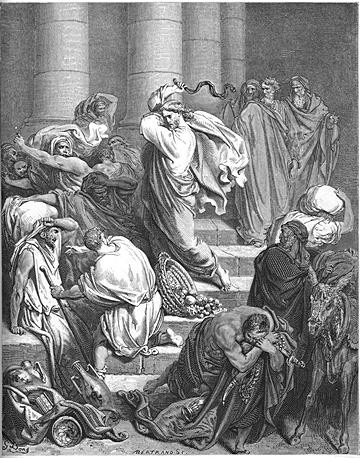
12 Then Jesus went into the Temple [courtyard] and chased out all of those who were buying and selling things there. He also overturned the tables of those who were giving [Temple tax money in exchange for Roman] coins, and he overturned the seats of those who were selling pigeons [for sacrifices].
anantaraṁ yīśurīśvarasya mandiraṁ praviśya tanmadhyāt krayavikrayiṇō vahiścakāra; vaṇijāṁ mudrāsanānī kapōtavikrayiṇāñcasanānī ca nyuvjayāmāsa|
13 Then he said to them, “It is {([Jeremiah/A prophet]) has} written [in the Scriptures that God said], ‘[I want] my house to be called a place where [people] pray’, but you bandits have made it [MET] your hideout!”
aparaṁ tānuvāca, ēṣā lipirāstē, "mama gr̥haṁ prārthanāgr̥hamiti vikhyāsyati", kintu yūyaṁ tad dasyūnāṁ gahvaraṁ kr̥tavantaḥ|
14 After that, [many] blind [people] and lame [people] came to Jesus in the temple [in order that he would heal them], and he healed them.
tadanantaram andhakhañcalōkāstasya samīpamāgatāḥ, sa tān nirāmayān kr̥tavān|
15 The high priests and the men who taught the people the [Jewish] laws saw the wonderful deeds that Jesus did. [They also saw and] heard the children shouting in the Temple, “We praise the [Messiah], the descendant of [King] David!” The religious leaders were indignant [because they did not believe that Jesus was the Messiah].
yadā pradhānayājakā adhyāpakāśca tēna kr̥tānyētāni citrakarmmāṇi dadr̥śuḥ, jaya jaya dāyūdaḥ santāna, mandirē bālakānām ētādr̥śam uccadhvaniṁ śuśruvuśca, tadā mahākruddhā babhūvaḥ,
16 [They thought that Jesus should not be allowing the children to say that], so they asked him, “[How can you tolerate] this [RHQ]? Do you hear what these [children] are shouting?” Then Jesus said to them, “Yes, I [hear them, but] if you [remembered what] you have read [in the Scriptures about children praising me, you would know that God is pleased] [RHQ] [with them]. [The psalmist] wrote, [saying to God], ‘You have taught infants and other children to praise you perfectly.’”
taṁ papracchuśca, imē yad vadanti, tat kiṁ tvaṁ śr̥ṇōṣi? tatō yīśustān avōcat, satyam; stanyapāyiśiśūnāñca bālakānāñca vaktrataḥ| svakīyaṁ mahimānaṁ tvaṁ saṁprakāśayasi svayaṁ| ētadvākyaṁ yūyaṁ kiṁ nāpaṭhata?
17 Then Jesus left the city. We [disciples] went [with him] to Bethany [town], and we slept there [that night].
tatastān vihāya sa nagarād baithaniyāgrāmaṁ gatvā tatra rajanīṁ yāpayāmāsa|
18 Early [the next morning], when we were returning to the city, [Jesus] was hungry.
anantaraṁ prabhātē sati yīśuḥ punarapi nagaramāgacchan kṣudhārttō babhūva|
19 He saw a fig tree near the road. [So he went over to it to pick some figs to eat]. But when he got close, he saw that there were no [figs on the tree]. There were only leaves on it. So [to illustrate how God would punish the nation of Israel], he said to the fig tree, “May you never again produce figs!” As a result, the fig tree withered that night. (aiōn g165)
tatō mārgapārśva uḍumbaravr̥kṣamēkaṁ vilōkya tatsamīpaṁ gatvā patrāṇi vinā kimapi na prāpya taṁ pādapaṁ prōvāca, adyārabhya kadāpi tvayi phalaṁ na bhavatu; tēna tatkṣaṇāt sa uḍumbaramāhīruhaḥ śuṣkatāṁ gataḥ| (aiōn g165)
20 [The next day] when we disciples saw [what had happened to the tree], we marveled, and we said [to Jesus], “(It is astonishing that the fig tree withered so quickly!/How is it that the fig tree dried up so quickly?)” [RHQ]
tad dr̥ṣṭvā śiṣyā āścaryyaṁ vijñāya kathayāmāsuḥ, āḥ, uḍumvarapādapō'titūrṇaṁ śuṣkō'bhavat|
21 Jesus said to us, “Think about this: If you believe [that God has power to do what you ask him to] and you do not doubt [that], you will be able to do [things like what I have] done to this fig tree. You will even be able to do [marvelous deeds like] saying to a nearby hill, ‘Uproot yourself and throw yourself into the sea’, and it will happen!
tatō yīśustānuvāca, yuṣmānahaṁ satyaṁ vadāmi, yadi yūyamasandigdhāḥ pratītha, tarhi yūyamapi kēvalōḍumvarapādapaṁ pratītthaṁ karttuṁ śakṣyatha, tanna, tvaṁ calitvā sāgarē patēti vākyaṁ yuṣmābhirasmina śailē prōktēpi tadaiva tad ghaṭiṣyatē|
22 In addition [to that], whenever you ask [God for something] when you pray [to him, if you] believe [that he will give it to you], you will receive [it from him].”
tathā viśvasya prārthya yuṣmābhi ryad yāciṣyatē, tadēva prāpsyatē|
23 After that, Jesus went into the Temple [courtyard]. While he was teaching [the people], the chief priests and the elders of the Jewish Council approached him. They asked, “By what authority are you doing these things? Who authorized you to do what you did [here yesterday] [DOU]?”
anantaraṁ mandiraṁ praviśyōpadēśanasamayē tatsamīpaṁ pradhānayājakāḥ prācīnalōkāścāgatya papracchuḥ, tvayā kēna sāmarthyanaitāni karmmāṇi kriyantē? kēna vā tubhyamētāni sāmarthyāni dattāni?
24 Jesus said to them, “I also will ask you a question, and if you answer me, I will tell you who authorized me to do these things.
tatō yīśuḥ pratyavadat, ahamapi yuṣmān vācamēkāṁ pr̥cchāmi, yadi yūyaṁ taduttaraṁ dātuṁ śakṣyatha, tadā kēna sāmarthyēna karmmāṇyētāni karōmi, tadahaṁ yuṣmān vakṣyāmi|
25 Where did John [the Baptizer] get [his authority to] baptize [those who came to him]? [Did he get it] from God or from people? [MTY/EUP]” The chief priests and elders debated among themselves [about what they should answer]. [They said to each other], “If we say, ‘[It was] [MTY/EUP] from God’, he will say to us, ‘Then (you should have believed his [message]!/why did you not believe [John’s message]?) [RHQ]’
yōhanō majjanaṁ kasyājñayābhavat? kimīśvarasya manuṣyasya vā? tatastē parasparaṁ vivicya kathayāmāsuḥ, yadīśvarasyēti vadāmastarhi yūyaṁ taṁ kutō na pratyaita? vācamētāṁ vakṣyati|
26 If we say, ‘It was from people’, we are afraid that the crowd [will react violently], because all [the people] believe that John was a prophet [sent by God].”
manuṣyasyēti vaktumapi lōkēbhyō bibhīmaḥ, yataḥ sarvvairapi yōhan bhaviṣyadvādīti jñāyatē|
27 So they answered Jesus, “We do not know [where John got his authority].” Then he said to them, “[Because you did not answer my question], I will not tell you who authorized me to do the things I did [here yesterday].”
tasmāt tē yīśuṁ pratyavadan, tad vayaṁ na vidmaḥ| tadā sa tānuktavān, tarhi kēna sāmarathyēna karmmāṇyētānyahaṁ karōmi, tadapyahaṁ yuṣmān na vakṣyāmi|
28 [Then Jesus said to the chief priests and elders], “Tell me [RHQ] what you think [about what I am about to tell you]. There was a man who had two sons. He went to his older son and said, ‘My son, go and work in my vineyard today!’
kasyacijjanasya dvau sutāvāstāṁ sa ēkasya sutasya samīpaṁ gatvā jagāda, hē suta, tvamadya mama drākṣākṣētrē karmma kartuṁ vraja|
29 But the son said [to his father], ‘I do not want to [go and work in your vineyard today]!’ But later he changed his mind, and he went to the vineyard [and worked].
tataḥ sa uktavān, na yāsyāmi, kintu śēṣē'nutapya jagāma|
30 Then the father approached his younger son and said what he had said to his older son. That son said, ‘Sir, I will [go and work in the vineyard today.’] But he did not go there.
anantaraṁ sōnyasutasya samīpaṁ gatvā tathaiva kathtivān; tataḥ sa pratyuvāca, mahēccha yāmi, kintu na gataḥ|
31 So which of the man’s two sons did what their father desired?” They answered, “The older son.” Jesus [explained to them what that parable meant] by saying, “Think about this: [It is more likely that other people, including] tax collectors and prostitutes, [whom you think are very sinful], will enter where God rules, than it is that you [Jewish leaders] will enter.
ētayōḥ putrayō rmadhyē piturabhimataṁ kēna pālitaṁ? yuṣmābhiḥ kiṁ budhyatē? tatastē pratyūcuḥ, prathamēna putrēṇa| tadānīṁ yīśustānuvāca, ahaṁ yuṣmān tathyaṁ vadāmi, caṇḍālā gaṇikāśca yuṣmākamagrata īśvarasya rājyaṁ praviśanti|
32 I [say this to you] because, even though John [the Baptizer] explained to you how to live righteously, you did not believe his message. But tax collectors and prostitutes believed his [message, and they turned away from their sinful behavior]. In contrast, you, even though you saw what they did, refused to turn away from your sinful behavior, and you did not believe [John’s message].”
yatō yuṣmākaṁ samīpaṁ yōhani dharmmapathēnāgatē yūyaṁ taṁ na pratītha, kintu caṇḍālā gaṇikāśca taṁ pratyāyan, tad vilōkyāpi yūyaṁ pratyētuṁ nākhidyadhvaṁ|
33 “Listen to another parable [that I will tell you]. There was a landowner who planted a vineyard. He built a fence around it. He dug a hole in the ground [inside the fence]. He placed [in the hole] a stone tank to [collect the juice that would be] pressed out of the grapes. He also built a tower [inside that fence that someone would sit in to guard that vineyard]. He arranged for some men [to care for] the vineyard [and to give him some of the grapes in return]. Then he went away to another country.
aparamēkaṁ dr̥ṣṭāntaṁ śr̥ṇuta, kaścid gr̥hasthaḥ kṣētrē drākṣālatā rōpayitvā taccaturdikṣu vāraṇīṁ vidhāya tanmadhyē drākṣāyantraṁ sthāpitavān, māñcañca nirmmitavān, tataḥ kr̥ṣakēṣu tat kṣētraṁ samarpya svayaṁ dūradēśaṁ jagāma|
34 When it was time to harvest the grapes, the landowner sent some of his servants to the men who were taking care of the vineyard to get his share of the grapes [that the vineyard had produced].
tadanantaraṁ phalasamaya upasthitē sa phalāni prāptuṁ kr̥ṣīvalānāṁ samīpaṁ nijadāsān prēṣayāmāsa|
35 But the renters seized the servants. They beat one of them, they killed another one, and [killed] another one of them [by throwing] stones at him.
kintu kr̥ṣīvalāstasya tān dāsēyān dhr̥tvā kañcana prahr̥tavantaḥ, kañcana pāṣāṇairāhatavantaḥ, kañcana ca hatavantaḥ|
36 [So the landowner] sent more servants than [he had sent] the first [time]. The renters treated those servants the same way that [they had treated the other servants].
punarapi sa prabhuḥ prathamatō'dhikadāsēyān prēṣayāmāsa, kintu tē tān pratyapi tathaiva cakruḥ|
37 Later, [knowing this], [the landowner] sent his son to [the renters to get his share of the grapes]. When he sent him, he said [to himself], ‘They will certainly respect my son [and give him some of the grapes].’
anantaraṁ mama sutē gatē taṁ samādariṣyantē, ityuktvā śēṣē sa nijasutaṁ tēṣāṁ sannidhiṁ prēṣayāmāsa|
38 But when the renters saw his son [arriving], they said to each other, ‘This is the man who will inherit [this vineyard]! Let’s kill him and divide the property [among ourselves].’
kintu tē kr̥ṣīvalāḥ sutaṁ vīkṣya parasparam iti mantrayitum ārēbhirē, ayamuttarādhikārī vayamēnaṁ nihatyāsyādhikāraṁ svavaśīkariṣyāmaḥ|
39 So they grabbed him, dragged him outside the vineyard, and killed him.
paścāt tē taṁ dhr̥tvā drākṣākṣētrād bahiḥ pātayitvābadhiṣuḥ|
40 [Now I ask you], when the landowner returns to his vineyard, what [do you think] he will do to those renters?”
yadā sa drākṣākṣētrapatirāgamiṣyati, tadā tān kr̥ṣīvalān kiṁ kariṣyati?
41 [The chief priests and elders] replied, “He will thoroughly destroy those wicked [renters]! Then he will rent the vineyard to others. They will give him [his share of] the grapes when they are ripe.”
tatastē pratyavadan, tān kaluṣiṇō dāruṇayātanābhirāhaniṣyati, yē ca samayānukramāt phalāni dāsyanti, tādr̥śēṣu kr̥ṣīvalēṣu kṣētraṁ samarpayiṣyati|
42 Jesus said to them, “[That is right, so you need to think carefully about these words which] you have read [RHQ] in the Scriptures: The builders rejected a certain stone. [But others put] that same stone [in its proper place, and it] has become the most important stone [of the] building [MET]. The Lord has done this, and we marvel as we look at it.
tadā yīśunā tē gaditāḥ, grahaṇaṁ na kr̥taṁ yasya pāṣāṇasya nicāyakaiḥ| pradhānaprastaraḥ kōṇē saēva saṁbhaviṣyati| ētat parēśituḥ karmmāsmadr̥ṣṭāvadbhutaṁ bhavēt| dharmmagranthē likhitamētadvacanaṁ yuṣmābhiḥ kiṁ nāpāṭhi?
43 So, [because you reject me], I am going to tell you this: God will no longer let you [Jews] be the people over whom he rules. Instead, he will let [non-Jews] be the people over whom he rules, and they will do [IDM] what he asks them to do.
tasmādahaṁ yuṣmān vadāmi, yuṣmatta īśvarīyarājyamapanīya phalōtpādayitranyajātayē dāyiṣyatē|
44 [The important stone in the building represents me, the Messiah, and those who reject me are like people who fall on this stone]. Anyone who falls on this stone will be broken into pieces {This cornerstone will break into pieces anyone who falls on it}, and it will crush anyone on whom it falls.”
yō jana ētatpāṣāṇōpari patiṣyati, taṁ sa bhaṁkṣyatē, kintvayaṁ pāṣāṇō yasyōpari patiṣyati, taṁ sa dhūlivat cūrṇīkariṣyati|
45 When the chief priests and the [elders who were] Pharisees heard this parable, they realized that he was accusing them [because they did not believe that he was the Messiah].
tadānīṁ prādhanayājakāḥ phirūśinaśca tasyēmāṁ dr̥ṣṭāntakathāṁ śrutvā sō'smānuddiśya kathitavān, iti vijñāya taṁ dharttuṁ cēṣṭitavantaḥ;
46 They wanted to seize him, but [they did not do so] because they were afraid of what the crowds [would do if they did that], because [the crowds] considered that Jesus was a prophet.
kintu lōkēbhyō bibhyuḥ, yatō lōkaiḥ sa bhaviṣyadvādītyajñāyi|