Markos 3
1 Guero sar cedin berriz synágogán, eta cen han guiçombat escua eyhartua çuenic.
[On another] ([Sabbath/Jewish day of rest]), Jesus entered (the synagogue/the Jewish meeting place) again. There was a man there whose hand was shriveled.
2 Eta gogoatzen çutén eya Sabbathoan sendaturen çuenez accusa leçatençat.
[Some men of the Pharisee sect] watched him carefully in order to see whether he would heal the man (on the Sabbath/on the Jewish rest day). They did this in order that [if he healed the man], they would accuse him of disobeying [their Jewish laws, because he worked] ([on the Sabbath/on the Jewish rest day]).
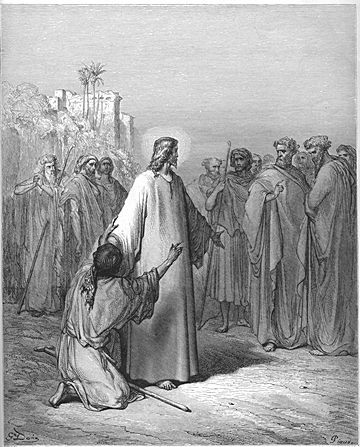
3 Eta diotsa guiçon escu eyhartua çuenari, Iaiqui adi artera.
Jesus said to the man whose hand was shriveled, “Stand up here in front of everyone!” [So the man stood up].
4 Guero dioste, Sabbathoan vngui eguitea da sori, ala gaizqui eguitea? persona baten emparatzea, ala hiltzea: baina hec ichilic ceuden.
Then Jesus said [to the Pharisees], “Do the laws [that God gave Moses] permit people to do good ([on the Sabbath/on the Jewish rest day]), or do they permit people to do evil? Specifically, do his laws permit us to save a person’s life (on the Sabbath/on the Jewish rest day), or [do they permit us] to let him die [by refusing to help him]?” But they did not reply.
5 Eta hetarát inguru behaturic asserrerequin, eta hayén bihotzeco obstinationeaz contristaturic, diotsa guiçonari, Heda eçac eure escua: Eta heda çeçan, eta haren escua, bercea beçain senda cedin.
He looked around at them angrily. He was very distressed that they were stubbornly [not wanting to help the man]. So he said to the man, “Reach out your hand!” When the man reached out his withered hand, his hand became all right again!
6 Orduan ilkiric Phariseuéc, bertan Herodianoequin conseillu eduqui ceçaten haren contra, hura hil lecatençat.
Then the Pharisees [decided to get rid of Jesus. So] after they left [the meeting house], they [immediately met with some of] the Jews who supported Herod [Antipas, who ruled Galilee district]. Together they planned how they could kill Jesus.
7 Baina Iesus bere discipuluequin retira cedin itsas alderát: eta iarrequi cequión gendetze handia Galileatic eta Iudeatic.
Jesus and his disciples left [that] town and went to an area further along [Galilee Lake in order to get away from the people]. But a great crowd of people followed him. They were people who came from Galilee [district],
8 Eta Ierusalemetic, eta Idumeatic, eta Iordanaz berce aldetic: eta Tyreco eta Sydoneco inguruètan habitatzen ciradenetaric gendetze handi, ençunic cein gauça handiac eguiten cituen, ethor citecen harengana.
from Jerusalem [city], from [other towns of] Judea [district], from Idumea [district], from [the region on] the [east] side of the Jordan [River], and from [the region] around Tyre and Sidon [cities]. This great crowd of people came to him because they heard about what he was doing.
9 Eta erran ciecén bere discipuluey vncichobat bethi prest eduqui lequión, gendetzearen causaz, hers ezleçatençát.
Because he had healed many people, many [other] people who had various illnesses pushed forward in order that by touching him [they would come well]. So he told his disciples that they should get a small boat ready for him [to get in and teach from it]. He wanted to do this in order that the crowd would not crush him [when they pushed forward to touch him].
10 Ecen anhitz sendatu vkan çuen, hala non afflictionetan ciraden guciac oldartzen baitziraden harengana hunqui lecatençat.
11 Eta spiritu satsuéc hura ikusten çutenean, haren aitzinera bere buruäc egoizten cituztén, eta oihu eguiten çuten, cioitela, Hi aiz Iaincoaren Sem
Whenever the evil spirits saw Jesus, [they caused the people whom they controlled] to fall down in front of Jesus [in recognition of Jesus’ power]. Then they exclaimed, “You are (the Son of God/the man who is also God)!”
12 Baina harc haguitz mehatchatzen cituen, manifesta ez leçatençat.
He commanded the [evil spirits] strongly that they should not tell anyone who he was.
13 Guero igan cedin mendi batetara, eta dei citzan beregana nahi cituenac: eta ethor citecen harengana.
Jesus went [with many other people] up into the hills. After he picked out [from among them] the men whom he wanted [to accompany him], they came [close] to him.
14 Eta ordena citzan hamabi harequin içateco, eta predicatzera igorteco:
He appointed twelve men in order that they might be with him and in order that he might send them out to preach. He called them apostles.
15 Eta lutén bothere eritassunén sendatzeco, eta deabruén campora egoizteco.
He also gave them power in order that they might expel evil spirits [from people].
16 Lehenic Symon, (ceini icen eman baitzieçon Pierris:)
These were the twelve men he appointed: Simon, to whom he gave the [new] name Peter; his [younger] brother Andrew;
17 Eta Iacques Zebedeoren semea, eta Ioannes Iacquesen anayea, (eta hæy icen eman ciecén Boanerges, erran nahi baita, igorciri semeac)
James, [the son] of Zebedee, and John, the [younger] brother of James, to [both of] whom he added the [new] name, ‘Men who are like Thunder’. [because of their fiery zeal];
18 Eta Andriu eta Philippe, eta Bartholomeo, eta Mattheu, eta Thomas, eta Iacques Alpheoren semea, eta Thaddeo, eta Simon Cananeoa,
Philip; Bartholomew; Levi, whose other name was Matthew; Thomas; [another] James, the son of Alphaeus; Thaddeus; [another] Simon, who was a [member of the party that wanted] to overthrow [the Roman government];
19 Eta Iudas Iscariot, ceinec bera traditu-ere baitzuen.
and Judas Iscariot (OR, Judas, the man from Kerioth [Town]). He was the one who [later] (betrayed Jesus/helped Jesus’ enemies seize him).
20 Eta ethor citecen etchera: eta berriz gendetze handibat bil cedin, hala non oguiaren iateco artea-ere ecin har baitziroiten.
Jesus [along with his disciples] went to the house where he was staying [in Capernaum. Again a crowd gathered where he was]. There were many people crowding around him, so that he and his disciples had no time when they could eat or [when they could do anything else].
21 Eta haur ençun çutenean haren ahaideac ilki citecen hatzaman leçatençat: ecen erraiten çuten, çoratu cela.
After his relatives heard about this, they went to take him home [with them] because (some people/they) were saying that he was insane.
22 Eta Ierusalemetic iautsi içan ciraden Scribéc erraiten çutén, ecen Beelzebub çuela, eta deabruén princearen partez deabruac campora egoizten cituela.
[Around that time] some men who taught the [Jewish] laws came down from Jerusalem [city. They heard that Jesus was expelling demons]. So they were telling [people], “Beelzebub, who rules the evil spirits, controls him. He is the one who enables this man to expel evil spirits [from people]!”
23 Eta hec beregana deithuric, erran ciecén comparationez, Nolatan Satanec Satan campora egotz ahal deçaque.
Jesus summoned those men. [Then he spoke to them] in parables [to enable them to realize that Satan would not oppose his own evil spirits. He also wanted them to realize that by expelling evil spirits, he was demonstrating that he was much more powerful than Satan]. So he said, “([It is ridiculous] to suggest that Satan would expel his own [evil spirits]!/Why would Satan expel his own [evil spirits]?) [RHQ]
24 Ecen baldin resumabat bere contra partitua bada, ecin dauque resuma hura.
If [people who live in the same] country are fighting one another, they will cease to be a single group under one ruler.
25 Eta baldin etchebat bere contra partitua bada, ecin dauque etche hura.
And if [people who live in the same] house fight each other, they will certainly not remain [as one family].
26 Hala baldin Satan-ere altcha badadi eta partitua bada bere contra, ecin dauque, baina fin du.
Similarly, if Satan and his [evil spirits] were fighting one another, instead of remaining strong, he would become powerless.
27 Ecin nehorc borthitz baten ostillamenduac, haren etchera sarthuric, pilla ahal ditzaque, baldin lehen borthitza esteca ezpadeça: eta orduan haren etchea pillaturen du.
Contrary to [what you say about me], someone can enter the house of a strong man [like Satan] and carry off his possessions only if he first ties up the strong man. Then [and only then] will he [be able to] steal the things in that man’s house.”
28 Eguiaz erraiten drauçuet, ecen bekatu guciac guiçonén seméy barkaturen çaiztela, eta blasphematu dituqueizten blasphemio guciac:
[Jesus also said], “Consider this carefully! People may sin in many ways and they may speak evilly about God, but [if] they [then are sorry and ask God to] forgive [them], [God] will forgive them for doing that.
30 Ecen erraiten çuten, Spiritu satsua du.
[Jesus told them that] because [they refused to admit that the Holy Spirit was helping him to expel demons. Instead], they were saying, “An evil spirit is controlling him!”
31 Ethorten dirade bada haren anayeac eta haren ama: eta lekorean ceudela igor citzaten batzu harengana, haren deitzera.
Jesus’ mother and [younger] siblings arrived. While they stood outside, they sent [someone inside] in order to call him [outside].
32 Eta iarriric cegoen haren inguruän gendetzea, eta hec erran cieçoten, Huná, hire amac eta hire anayéc lekorean galdeguiten aute.
A crowd was sitting around Jesus. One of them said to him, “Listen/Hey, your mother and your [younger] brothers and sisters are outside, and they are wanting (to see/to talk with) you!”
33 Orduan ihardets ciecén, cioela, Nor da ene ama, edo ene anayeac?
Jesus replied to them, “([I will tell you something about] my mother and my brothers.[/Do you know whom I consider to be like] my mother and my brothers?)” [RHQ]
34 Eta inguru behatu çuenean haren inguruän iarriric ceuden discipuluetara, dio, Huná ene ama, eta ene anayeac.
After he looked around at [the disciples] who were sitting around him [in a circle], he said, “Look here! I [love these men as much as] I [love] my mother and my brothers.
35 Ecen norc-ere eguine baitu Iaincoare vorondatea, hura da ene anaye eta ene arreba, eta ama
Those who habitually do what God wants are [as dear to me] [MET] as my brother, my sister, or my mother!”